Resources
On This Page
Resources by Topic
Awards & Performance Reviews
- Tips for graduate student selection
 This tip sheet highlights common equity and inclusion hazards in recruitment and selection of graduate students and offers practical, evidence-informed strategies to avoid them. By using inclusive language, broadening how excellence is defined, reducing bias, and creating transparent, accessible, and humane processes, programs can attract a more diverse applicant pool and make fairer, more rigorous decisions that benefit students, programs, and the Faculty as a whole.
 - REDI Best Practices: Mitigating Cognitive Biases in Awards Adjudication
 This tip sheet offers practical strategies to help committees mitigate conscious and unconscious cognitive biases, ensuring a fairer and more equitable awards decisions.
 - REDI Best Practices: Adjudicating Awards through an EDI lens
 This tip sheet guides you in structuring and refining the awards process through an EDI lens. From encouraging diverse applications and nominations to creating transparent, bias-aware adjudication stages, it provides best practices to ensure fairness at every step.
 - REDI Deep Dives: Bias Busters
 This Deep Dive slide deck is designed to bust biases and inspire action within your team. Through a series of short activities, this resource empowers teams to identify biases and strategies on mitigating their impact on decision-making. Dive into a 30-minute session coupled with a dynamic 20-minute pre-session homework activity, tailored for any team eager to enhance their decision-making processes. Ideal for all teams, especially those involved in high-stakes adjudication decisions (such as hiring, or research grants) or time-sensitive situations (like emergency doctors or surgeons), where biases can significantly influence outcomes. Empower your team to make decisions with clarity and fairness with these Bias Busters.
Communication
- Engaging Values, Shifting Culture: Evidence-Based Approaches to Frame Messages that Inspire Enduring Change
 Watch a recording for an It Starts With Us session with Mark Chenery, Co-Founder and Director of Common Cause Australia. Mark facilitated training on the Common Cause Values and Frames Fundamentals—an evidence-based approach designed for healthcare professionals, educators, leaders, and staff who want to communicate in ways grounded in shared human values.
Conflict Engagement
- Moments That Matter: Conflict
 In this guide, we focus on Conflict as a key moment that can either strengthen respect and belonging or deepen resentment and exclusion. It highlights how conflict is inevitable and not inherently negative. The guide invites reflection on how to help ensure that conflict is addressed in ways that protect equity-deserving voices and support learning, and trust.
 - Moving from Harm to Healing (part II): A Practical and Relational Lens on Harm and Conflict
 Join us virtually on Monday, March 30, 2026, from 12:00 PM – 1:30 PM (PT), for a session with Catherine Bargen, co-founder of Just Outcomes Canada and a recognized leader in restorative and relational conflict transformation. Moving beyond the “why” of restorative practice, this session provides both principles and examples to guide everyday situations. Participants will be introduced to frameworks for addressing conflict and harm, and for centring relationships by promoting belonging, accountability, and repair.
 - Building a More Welcoming Movement Toward a Just Culture
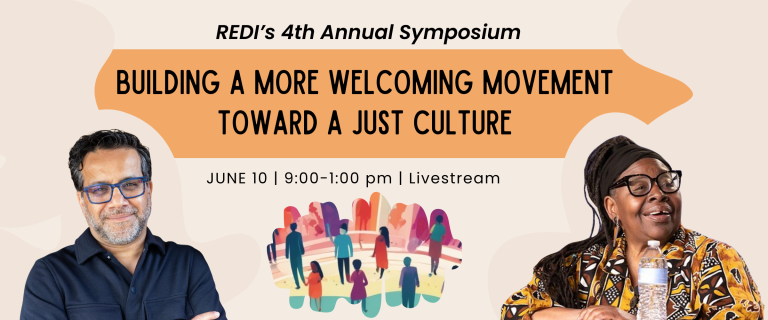 What motivates real cultural change? How can we create movements that feel hopeful and actionable? Watch a recording for REDI’s Fourth Annual Symposium to learn about evidence-based approaches in psychology, social change, and transformative education to creating lasting, inclusive change—grounded in science, compassion, and care.
 - REDI Best Practices: Receiving Feedback Well
 Feedback is essential for growth, yet receiving it gracefully—especially when it involves EDI—can be challenging. This tip sheet provides actionable strategies to overcome common barriers—such as defensiveness, emotional reactions, and binary thinking. It supports you in transforming difficult conversations into meaningful opportunities for personal reflection and professional growth.
 - Moving from Harm to Healing in EDI, Medical Education, and Clinical Practice
 Watch a recording for a conversation on reimagining conflict in medical education, clinical practice, leadership and EDI through restorative justice. This It Starts With Us session explores the possible limitations of retributive justice and the transformative potential of alternative conflict engagement practices.
 - Conflict Engagement
 The UBC Office of Equity and Inclusion’s Conflict Engagement Initiative defines conflict as “a difference that matters.” When conflict arises within a group or team, it can be either constructive or destructive. When destructive, it can create division, shut down communication, and lead to resentment. Recognizing the signs of destructive conflict is key to addressing and preventing them. Ultimately, conflict engagement skills encourage reframing conflict as constructive—a pathway to innovation and stronger relationships—rather than a recipe for division and blame.
 - REDI Best Practices: The O’DEAR Framework for Difficult Conversations
 This tip sheet provides a practical, step-by-step approach for navigating difficult conversations with respect and clarity. By following the O’DEAR model—Open, Describe, Explain, Ask, and Request—you can express concerns, listen actively, and co-construct solutions to address sensitive issues.
 - REDI Best Practices: Effective Feedback Strategies for Addressing EDI Mistakes
 This REDI Best Practices resource offers a thoughtful guide on navigating those tricky moments when someone makes an EDI-related mistake. With a focus on preparation and empathy, it helps you determine if feedback is the right approach and provides strategies for having constructive, respectful conversations. Dive in to learn how to turn these challenging situations into opportunities for growth and understanding.
 - Intergroup dialogue
 Intergroup dialogue is a face-to-face, structured, and facilitated group experience that creates opportunities for participants to listen deeply, engage in self-reflection, and gain new perspectives on polarizing societal issues.
 - REDI Best Practices: The 5 D’s of Bystander Intervention
 Imagine you witness harassment unfolding before your eyes. What steps can you take? This tip sheet breaks down the crucial elements of intervention, starting with a thoughtful consideration of timing. Is it safe to act immediately, or is it wiser to wait for a safer opportunity? Discover the five key actions you can take from direct intervention to delegation, each “D” offers a strategic approach tailored to various scenarios.
 - Polarization
 According to Courageous Dialogues: Moving Beyond Polarization project, “Polarization is a complex social dynamic that occurs when an issue that involves many different people, concerns and opinions is reduced to two opposing sides— ‘for or against’ or ‘us vs them.'” Learn more
 - REDI Deep Dives: Mastering Conflict with the O’DEAR Framework
 Master the art of conflict resolution with our REDI Deep Dive slide deck, where we unpack the O’DEAR framework. It features a series of interactive activities designed to hone your team’s ability to provide constructive feedback, preventing “smallish” conflicts from snowballing into bigger issues. Whether you’re onboarding new staff, setting norms, or addressing post-conflict scenarios, the O’DEAR framework is your compass for fostering a harmonious work environment. Ideal for any team seeking proactive conflict management strategies, this resource supports creating a harmonious work environment where concerns are addressed with finesse. Transform the way your team navigates conflict with this essential resource and turn conflicts into opportunities for growth!
 - REDI Grab ‘n’ Gos: Navigating Multiple Truths with The Dress
 Introducing REDI Grab ‘n’ Gos short slide deck – an express route to team harmony! Unleash the power of respectful disagreement within your unit with our 15-minute activity, “The Dress.” Watch as an optical illusion sparks diverse perspectives, providing the perfect stage to practice navigating multiple truths. Whether your team is in the midst of conflict resolution or welcoming new members, this activity is tailor-made for fostering understanding and unity. Simple and impactful, “The Dress” is your go-to resource for transforming disagreements into opportunities for understanding.
 - It Starts With Us: Conflict Engagement, Part 3
 Learn about our latest session and watch the recording
 - It Starts With Us: Conflict Engagement
 Introducing the newest module in our series to help build a strong, safe, and supportive community
Creating Inclusive Spaces
- 4 Steps to Help Deepen Awareness of Bias
 This guide outlines four practical, reflective steps to help deepen awareness of bias in everyday interactions and decision-making. Adapted from Deep Diversity by Shakil Choudhury, these steps are intended as an ongoing practice to support more equitable, reflective, and inclusive approaches in education, research, and clinical environments.
 - The ABCs of Compassionate Support
 Explore trauma-informed strategies for supporting a learner or colleague, without overstepping boundaries or assuming their full story.
 - Research Voices from the Field with Rola Ajjawi
 In this edition, Rola Ajjawi, Professor of Medical Education in the Department of Surgery and Associate Director (Research) at the UBC Centre for Health Education Scholarship, reflects on why she co-authored “Reflections on four theoretical perspectives of belonging” and how it can be relevant to medical education.
 - Building a More Welcoming Movement Toward a Just CultureWhat motivates real cultural change? How can we create movements that feel hopeful and actionable? Watch a recording for REDI’s Fourth Annual Symposium to learn about evidence-based approaches in psychology, social change, and transformative education to creating lasting, inclusive change—grounded in science, compassion, and care.
- Community Agreements for Guiding Conversations Among Diverse Participants
 Whether you’re leading a discussion or participating, this tip sheet offers practical guidance for fostering respectful and inclusive discussions, especially when conversations touch on complex or sensitive topics. Adapted from radical inclusivity practices, these agreements help participants navigate power dynamics, listen mindfully, and engage with openness and empathy.
 - REDI Best Practices: Writing Inclusive Case Studies
 Case studies shape how future clinicians understand patient care, but do they reflect the diversity of the people they will serve? This guide offers strategies for writing inclusive cases that challenge stereotypes, highlight systemic factors affecting health, and ensure all patients are seen as complex individuals. By integrating these principles, educators can foster more equitable and effective clinical learning.
 - REDI Best Practices: How to Avoid the “Minority Tax” On New Colleagues from HSPM Groups
 This guide offers strategies to create an inclusive and supportive environment for newly hired colleagues from historically, systemically, and persistently marginalized (HSPM) groups. Avoiding the “minority tax”—where marginalized individuals are burdened with extra emotional labour—requires proactive onboarding, effective mentoring, and ongoing team training. These best practices are vital for creating a welcoming environment where they can thrive.
 - REDI Best Practices: The 5 D’s of Bystander InterventionImagine you witness harassment unfolding before your eyes. What steps can you take? This tip sheet breaks down the crucial elements of intervention, starting with a thoughtful consideration of timing. Is it safe to act immediately, or is it wiser to wait for a safer opportunity? Discover the five key actions you can take from direct intervention to delegation, each “D” offers a strategic approach tailored to various scenarios.
- REDI Best Practices: Inclusive and Accessible Meetings
 Foster inclusivity in every meeting guided by this tip sheet tailor-made for administrative assistants, coordinators, and managers dedicated to creating spaces where every voice resonates. Discover practical strategies on how to prepare, structure, and chair meetings that prioritize accessibility.
 - REDI Deep Dives: Cultivating Upstanders
 Dive into a transformative journey with a REDI Deep Dive slide deck on fostering a culture of upstanders within your unit. This resource offers facilitation tips to initiate conversations about the bystander effect, guiding your team towards heightened awareness and actionable change.
 - REDI Grab ‘n’ Gos: Navigating Multiple Truths with The Dress Introducing REDI Grab ‘n’ Gos short slide deck – an express route to team harmony! Unleash the power of respectful disagreement within your unit with our 15-minute activity, “The Dress.” Watch as an optical illusion sparks diverse perspectives, providing the perfect stage to practice navigating multiple truths. Whether your team is in the midst of conflict resolution or welcoming new members, this activity is tailor-made for fostering understanding and unity. Simple and impactful, “The Dress” is your go-to resource for transforming disagreements into opportunities for understanding.
- REDI Grab ‘n’ Gos: Team Bonding
 Ignite team spirit and forge stronger bonds with our REDI Grab ‘n’ Gos slide deck—introducing the InsideOutside Activity! This engaging 15 min activity goes beyond the surface, providing a platform for team members to truly get to know each other. Tailored for any team seeking to enhance social cohesion, and especially helpful for units in the midst of onboarding new members. Break down barriers and discover new dimensions of teamwork with the InsideOutside Activity—a catalyst for creating meaningful connections within your group.
 - Bystander Effect
 Also known as Bystander Apathy, is a phenomenon in which the presence of other people discourages individuals from intervening in an emergency, against a bully, during an assault, or when some other injustice is being committed. The greater the number of bystanders present in the situation, the less likely that any one of them will provide help to a person in distress, as each individual feels like they bear less responsibility for intervening. Learn more
 - REDI Best Practices: Inclusive Ice Breaker Activities
 Looking to foster a sense of belonging, spark innovation, and deepen connections in your meetings or classroom? We invite you to download our “REDI Best Practices: Creating Belonging & Building Relationships Through Ice Breaker Activities.” This tip sheet will provide you with tools to craft meaningful experiences that promote inclusivity, connection and engagement.
Curriculum
- Transforming Health for Everyone: Strengthening Medical Curriculum in an era of Truth, Reconciliation and Inclusion
 Watch a recording for an It Starts With Us panel discussion exploring how curriculum in the Faculty of Medicine can be transformed to better reflect Indigenization, decolonization, and inclusion. Hear from leaders and educators who are reimagining how we teach and learn to prepare future health professionals to serve BC’s diverse communities.
 - REDI Best Practices: Writing Inclusive Case StudiesCase studies shape how future clinicians understand patient care, but do they reflect the diversity of the people they will serve? This guide offers strategies for writing inclusive cases that challenge stereotypes, highlight systemic factors affecting health, and ensure all patients are seen as complex individuals. By integrating these principles, educators can foster more equitable and effective clinical learning.
Disclosures
- Support Units for Navigating Disclosures of a Serious Concern in the Learning Environment
 When a learner discloses a serious concern affecting their learning environment, knowing how to respond or where to seek help can be challenging. This guide summarizes the various FoM and UBC units that support faculty, staff, and administrators in navigating disclosures and prioritizing student well-being.
Embedding EDI in Research
- Advancing Inclusive Research in Medicine: Anti-Racist and Decolonial Approaches
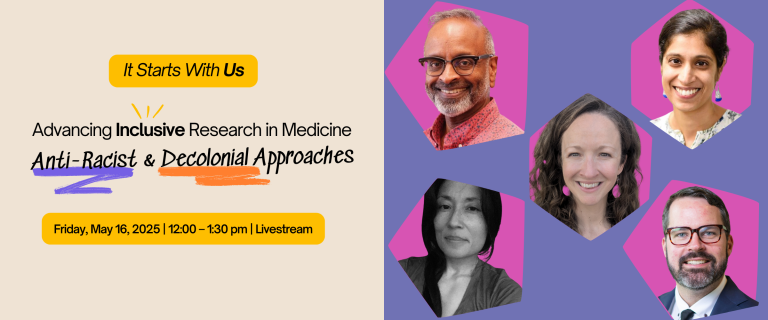 Watch a recording for a discussion on how medical and health researchers can cultivate more reciprocal, collaborative, and inclusive research practices that are culturally sensitive, anti-racist, and welcoming to historically, systemically, and persistently marginalized (HSPM) communities.
 - Co-Creation for Equity in Health Research
 How can we make our research more equitable? This REDI Best Practice tip sheet introduces co-creation as a collaborative approach to research that centres the voices and priorities of marginalized and underserved communities and leads to more impactful and inclusive research.
 - REDI Best Practices: Embedding EDI in Research
 Are you a researcher, faculty member, or staff member eager to embed Equity, Diversity, and Inclusion (EDI) into every facet of the research process? Introducing our tip sheet, “REDI Best Practices for Equitable and Inclusive Research.” This guide offers a roadmap for taking actionable steps to diversify your recruitment efforts, build authentic, ethical partnerships, break down barriers to participation, and ensure your research outputs benefit everyone.
Hiring & Recruitment
- 4 Steps to Help Deepen Awareness of BiasThis guide outlines four practical, reflective steps to help deepen awareness of bias in everyday interactions and decision-making. Adapted from Deep Diversity by Shakil Choudhury, these steps are intended as an ongoing practice to support more equitable, reflective, and inclusive approaches in education, research, and clinical environments.
- REDI Moments That Matter: Onboarding
 This guide focuses on Onboarding as a key moment that reveals whether commitments to equity, diversity, and inclusion are aligned with real-world practices. It highlights how early experiences shape belonging, engagement, and retention. It invites units to consider ways to level the playing field and create conditions for new faculty and staff to thrive.
 - REDI Moments That Matter: Faculty & Staff Recruitment
 In this first guide, we focus on Faculty and Staff Recruitment as a key moment that signals who is welcome and valued within a unit. The guide invites reflection on how recruitment practices shape culture, belonging, and retention long before someone joins a team, and how processes can either affirm or undermine stated commitments to equity and inclusion.
 - REDI Best Practices: Designing a Faculty In-Person Interview Experience for Success
 This tip sheet outlines the essentials of structuring an effective and inclusive faculty interview process at UBC. The in-person interview is a critical step in hiring, involving traditional Q&A sessions, teaching demonstrations, and strategic meetings with leadership and potential colleagues. It ensures that every candidate feels valued and has an equal opportunity to demonstrate their capabilities.
 - REDI Best Practices: EDI Criteria & Interview Questions in Faculty and Staff Searches
 This tip sheet offers a structured framework for reflecting on essential EDI considerations when developing a faculty hiring process, offering guidance to consider before writing the job posting, before reviewing applications, and before selecting interview questions. Offering several lists of selection criteria and interview questions, it is a prompt for hiring committees to think deeply about the meaning of “excellence” and approach the entirety of the hiring process with inclusion in mind.
 - REDI Best Practices: Managing Power Dynamics
 In the intricate world of hiring, power imbalances within a committee can shape outcomes. Master the art of inclusive chairing practices in hiring decisions with this guide and transform hiring deliberations into a collaborative journey where every perspective is valued.
 - REDI Deep Dives: Bias BustersThis Deep Dive slide deck is designed to bust biases and inspire action within your team. Through a series of short activities, this resource empowers teams to identify biases and strategies on mitigating their impact on decision-making. Dive into a 30-minute session coupled with a dynamic 20-minute pre-session homework activity, tailored for any team eager to enhance their decision-making processes. Ideal for all teams, especially those involved in high-stakes adjudication decisions (such as hiring, or research grants) or time-sensitive situations (like emergency doctors or surgeons), where biases can significantly influence outcomes. Empower your team to make decisions with clarity and fairness with these Bias Busters.
- REDI Best Practices: Mitigating Cognitive Biases in Hiring
 In the quest for equity in hiring, one formidable obstacle stands in the way: cognitive biases. These subtle yet powerful biases infiltrate the decision-making process, often leading to unconscious discrimination. ‘Mitigating Cognitive Biases in Hiring’ is your indispensable tip sheet, offering insights and strategies to level the playing field.
 - REDI Best Practices: Inclusive Job Postings
 Are you ready to transform your hiring process and open the doors to talent from historically marginalized backgrounds? Introducing the “REDI Best Practices for Equitable and Inclusive Job Postings.” This tip sheet will support you in crafting job descriptions that actively invite and embrace members of historically marginalized groups.
Inclusive Teaching
- Unpacking Polarities, Diversity Meets Reality: Grappling with the Hard Edges of Inclusive Clinical Teaching
 This REDI Deep Dive Facilitation Guide is an adaptable lesson plan for health sciences and professions educators leading EDI learning sessions with colleagues. Through reflection, dialogue, and case-based discussion, participants examine tensions in inclusive medical education, and identify practical strategies and systems changes that support diverse learners and more inclusive learning environments.
 - Research Voices from the Field with Cheryl Holmes
 In this edition, Cheryl Holmes, Associate Dean of Undergraduate Medical Education and Clinical Professor of Critical Care in the Department of Medicine reflects on why she co-authored “Core Competencies for Students Entering Medical School: Reaching Pan-Canadian Consensus for Inclusive and Accessible Medical Education” — a must-read for leaders and educators seeking to embed disability justice into medical education.
 - Research Voices from the Field with Rola AjjawiIn this edition, Rola Ajjawi, Professor of Medical Education in the Department of Surgery and Associate Director (Research) at the UBC Centre for Health Education Scholarship, reflects on why she co-authored “Reflections on four theoretical perspectives of belonging” and how it can be relevant to medical education.
- Research Voices from the Field with Bonita Sawatzky
 In this edition of our Research Voices from the Field series, Dr. Bonita Sawatzky (Department of Orthopaedics, Centre for Health Education Scholarship) reflects on why she co-authored “Lasting Impact of Patient-Led Medical Education,” highlighting the impact of patient educators in helping future physicians better understand life with chronic illness and disability.
 - Research Voices from the Field with Kevin Eva
 In this edition, Kevin Eva, Associate Director and Scientist in the Centre for Health Education Scholarship, and Professor and Director of Educational Research and Scholarship in the Department of Medicine, reflects on why he co-authored “Considerations of equity, diversity and inclusion in peer reviews conducted for Medical Education.”
 - Research Voices from the Field with Rabia Khan
 In this edition, Rabia Khan, Scientist at the Centre for Health Education Scholarship and Assistant Professor in the Department of Pediatrics, reflects on why she co-authored “Constructing “Burnout”: A Critical Discourse Analysis of Burnout in Postgraduate Medical Education”, the first paper from her doctoral dissertation Dying to Stay Alive in Residency and Beyond, highlighting its relevance for policymakers, educators, leaders, and trainees.
 - Research Voices from the Field with Katherine Wisener
 In this edition, Katherine Wisener, Associate Director, Faculty Development, reflects on why she co-authored “Upward Feedback: Exploring Learner Perspectives on Giving Feedback to their Teachers” and how it can be relevant to educators in medicine.
 - Research Voices from the Field with Saleem Razack
 Saleem Razack, Paediatric Intensivist, BC Children’s & REDI Senior Faculty Advisor, reflects on why he co-authored “Cutting Close to the Bone: Student Trauma, Free Speech, and Institutional Responsibility in Medical Education” and how it can be relevant to those in medicine, healthcare, and beyond.
 - Inclusive Professionalism in Medicine
 As our working and learning environments become more diverse, it’s worth questioning which elements of “professionalism” are essential for competent and effective education and care, and which perpetuate gatekeeping, exclusion, and various forms of oppression. Watch a recording of a conversation with health professionals and educators examining the concept professionalism.
 - Trauma-Informed Pedagogy
 Trauma-informed pedagogy is an approach to teaching and learning that is responsive to the diverse experiences of both individual and community trauma within academic settings.
 - Beyond Diversity: Embedding a Culture of Inclusive Excellence in Medicine
 Watch a recording of REDI’s Third Annual Symposium on embedding inclusive excellence into various domains of academic medicine. We addressed topics including teaching, mentorship, leadership, research, and patient care.
 - Universal Design
 Universal Design (UD) calls for the removal of barriers to support everyone, not only people with disabilities. It can be applied to a variety of contexts, including learning and the workplace.
 - It Starts With Us: ‘Rock the Boat’
 Join us on Tuesday, October 25th for It Starts With Us: Rock the Boat. Relevant to graduate students, staff, and faculty in supervisory relationships, this interactive event will illustrate the challenges that arise from the power dynamics inherent to supervisory relationships. The session will include watching videos of scenes of dramatic situations that can arise in supervisory relationships and discussing them in small groups. This session will prompt dialogue about how to foster healthy and respectful supervisory relationships and improve wellbeing for all while demonstrating a research-based theatre resource.