
Unpacking Polarities, Diversity Meets Reality: Grappling with the Hard Edges of Inclusive Clinical Teaching
This REDI Deep Dive Facilitation Guide is an adaptable lesson plan for health sciences and professions educators leading EDI learning sessions with colleagues. Through reflection, dialogue, and case-based discussion, participants examine tensions in inclusive medical education, and identify practical strategies and systems changes that support diverse learners and more inclusive learning environments.

Research Voices from the Field with Cheryl Holmes
In this edition, Cheryl Holmes, Associate Dean of Undergraduate Medical Education and Clinical Professor of Critical Care in the Department of Medicine reflects on why she co-authored “Core Competencies for Students Entering Medical School: Reaching Pan-Canadian Consensus for Inclusive and Accessible Medical Education” — a must-read for leaders and educators seeking to embed disability justice into medical education.

Research Voices from the Field with Rola Ajjawi
In this edition, Rola Ajjawi, Professor of Medical Education in the Department of Surgery and Associate Director (Research) at the UBC Centre for Health Education Scholarship, reflects on why she co-authored “Reflections on four theoretical perspectives of belonging” and how it can be relevant to medical education.

Research Voices from the Field with Bonita Sawatzky
In this edition of our Research Voices from the Field series, Dr. Bonita Sawatzky (Department of Orthopaedics, Centre for Health Education Scholarship) reflects on why she co-authored “Lasting Impact of Patient-Led Medical Education,” highlighting the impact of patient educators in helping future physicians better understand life with chronic illness and disability.

Research Voices from the Field with Kevin Eva
In this edition, Kevin Eva, Associate Director and Scientist in the Centre for Health Education Scholarship, and Professor and Director of Educational Research and Scholarship in the Department of Medicine, reflects on why he co-authored “Considerations of equity, diversity and inclusion in peer reviews conducted for Medical Education.”

Research Voices from the Field with Rabia Khan
In this edition, Rabia Khan, Scientist at the Centre for Health Education Scholarship and Assistant Professor in the Department of Pediatrics, reflects on why she co-authored “Constructing “Burnout”: A Critical Discourse Analysis of Burnout in Postgraduate Medical Education”, the first paper from her doctoral dissertation Dying to Stay Alive in Residency and Beyond, highlighting its relevance for policymakers, educators, leaders, and trainees.

Research Voices from the Field with Katherine Wisener
In this edition, Katherine Wisener, Associate Director, Faculty Development, reflects on why she co-authored “Upward Feedback: Exploring Learner Perspectives on Giving Feedback to their Teachers” and how it can be relevant to educators in medicine.
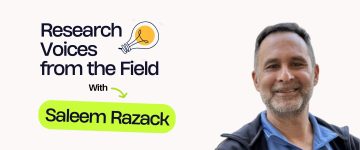
Research Voices from the Field with Saleem Razack
Saleem Razack, Paediatric Intensivist, BC Children’s & REDI Senior Faculty Advisor, reflects on why he co-authored “Cutting Close to the Bone: Student Trauma, Free Speech, and Institutional Responsibility in Medical Education” and how it can be relevant to those in medicine, healthcare, and beyond.

Inclusive Professionalism in Medicine
As our working and learning environments become more diverse, it’s worth questioning which elements of “professionalism” are essential for competent and effective education and care, and which perpetuate gatekeeping, exclusion, and various forms of oppression. Watch a recording of a conversation with health professionals and educators examining the concept professionalism.

Trauma-Informed Pedagogy
Trauma-informed pedagogy is an approach to teaching and learning that is responsive to the diverse experiences of both individual and community trauma within academic settings.